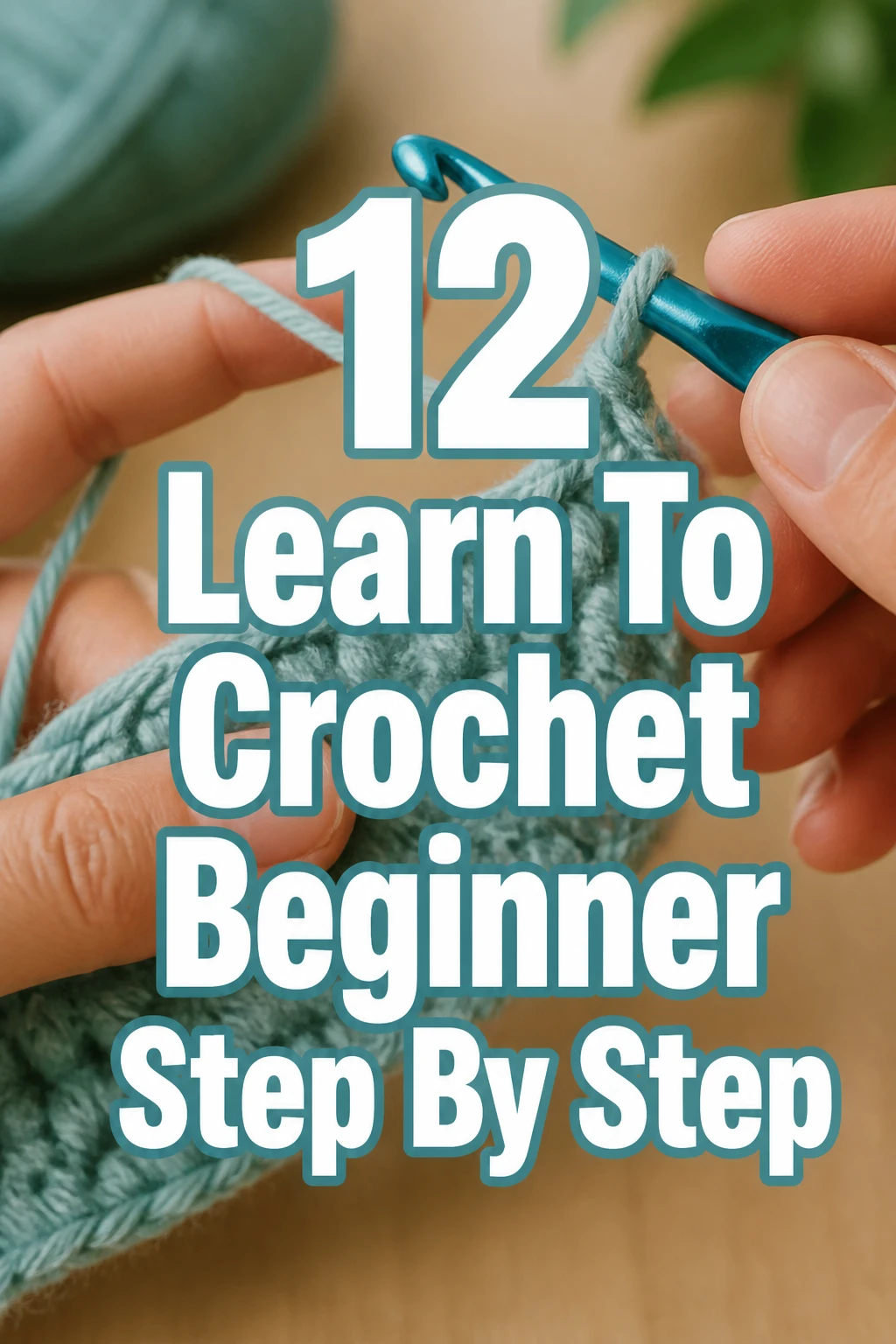
12 Learn To Crochet Beginner Step By Step
Ever scroll through Pinterest, totally mesmerized by those gorgeous handmade blankets and cute little amigurumi creatures?
Yeah, me too. And then you think, “I could totally do that,” right before reality hits you with a yarn bomb of confusion.
Don’t sweat it. We’re about to unravel the mystery and get you hooking in no time with these super simple beginner steps.
1. The Slip Knot and Chain Stitch
- Best For: Absolute newbies
- Vibe: Foundation building
- Why it works: It’s the literal first step for everything you’ll ever crochet.
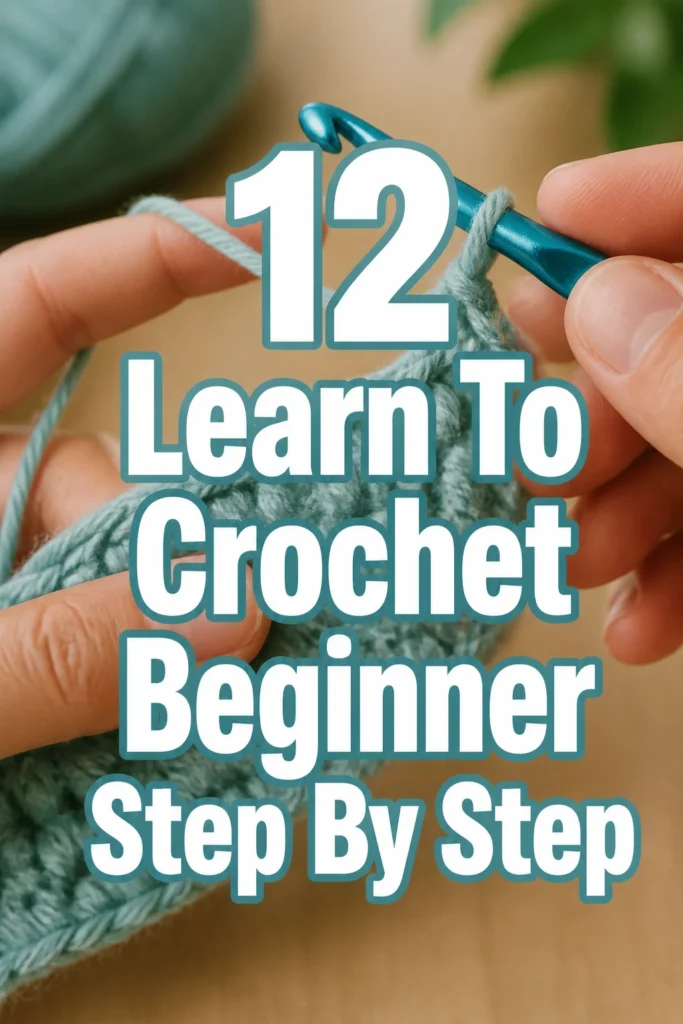
This is where the magic begins, literally. You’ll learn to make that initial loop and then create a series of uniform chains.
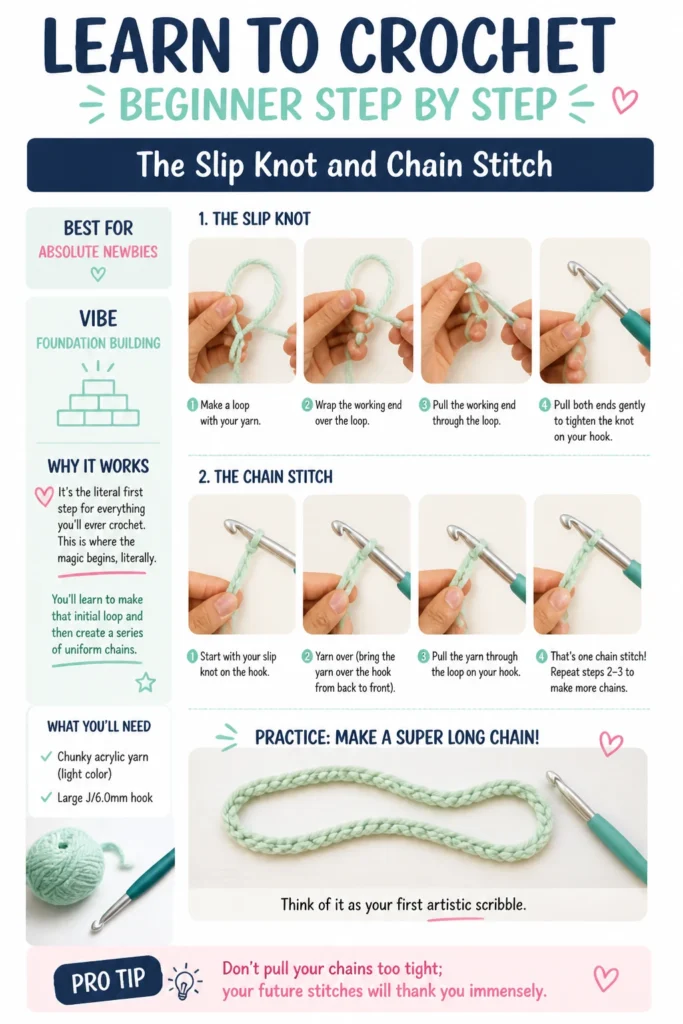
Grab a chunky acrylic yarn in a light color, like a soft mint green, and a large J/6.0mm hook. Practice making a super long chain; think of it as your first artistic scribble.
Pro Tip: Don’t pull your chains too tight; your future stitches will thank you immensely.
2. Single Crochet Stitch Swatch
- Best For: Learning basic tension
- Vibe: Skill building
- Why it works: It’s the simplest stitch and great for making flat, dense pieces.
Alright, chain master, let’s turn that chain into fabric. The single crochet is your bread and butter, the foundation of so many patterns.
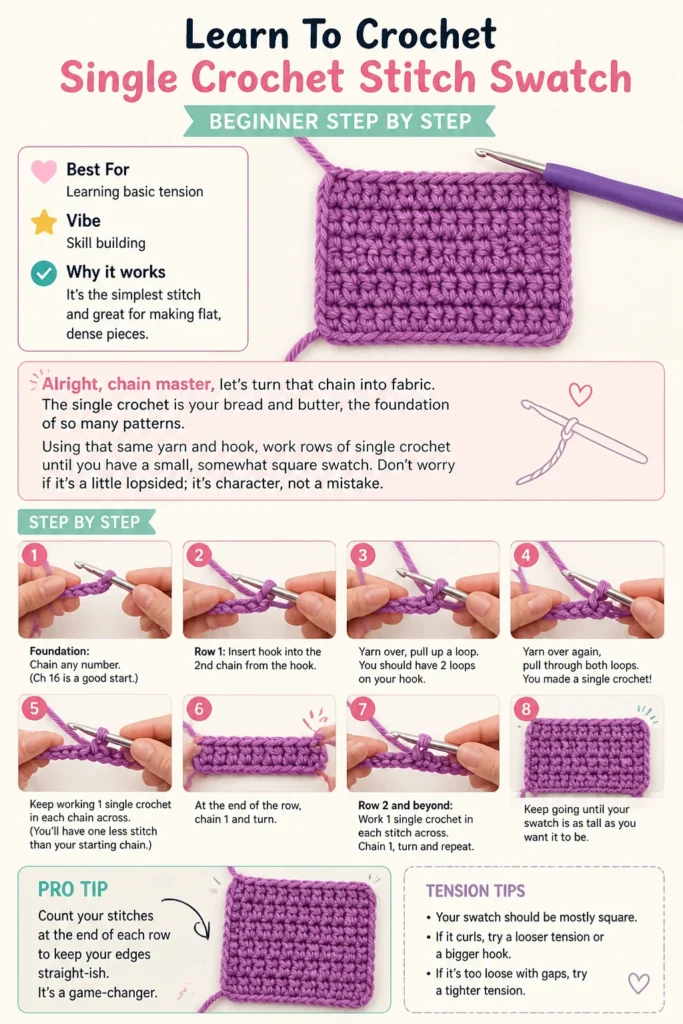
Using that same yarn and hook, work rows of single crochet until you have a small, somewhat square swatch. Don’t worry if it’s a little lopsided; it’s character, not a mistake.
Pro Tip: Count your stitches at the end of each row to keep your edges straight-ish. It’s a game-changer.
3. Simple Coasters
- Best For: First finished project
- Vibe: Functional chic
- Why it works: Small, quick, and actually useful for protecting your surfaces.
Time to make something you can actually use! Coasters are the perfect quick win for a beginner.
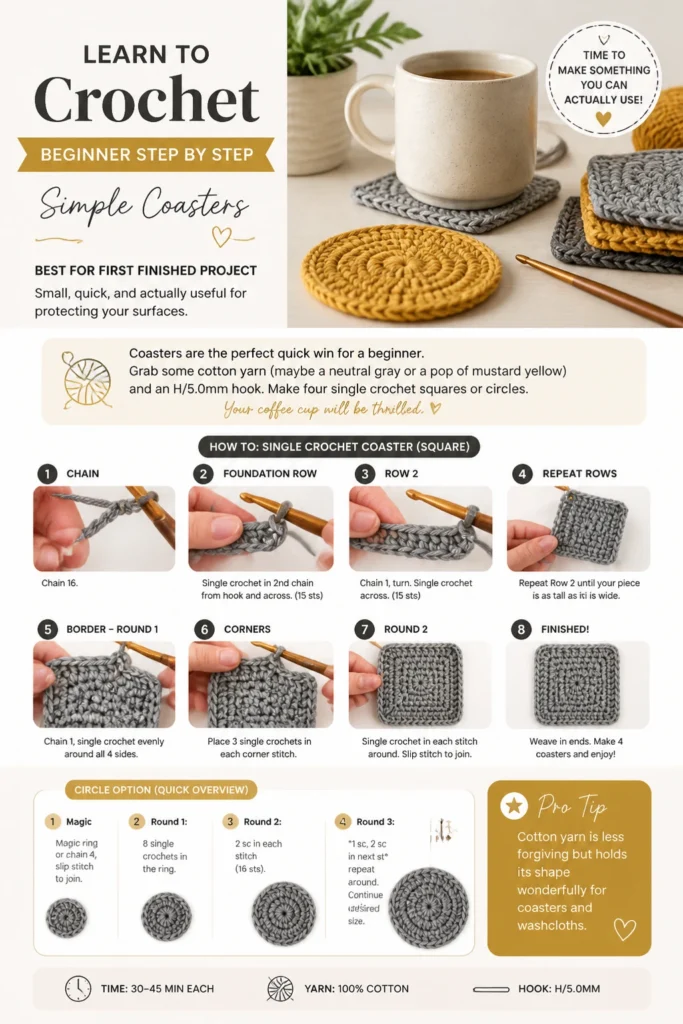
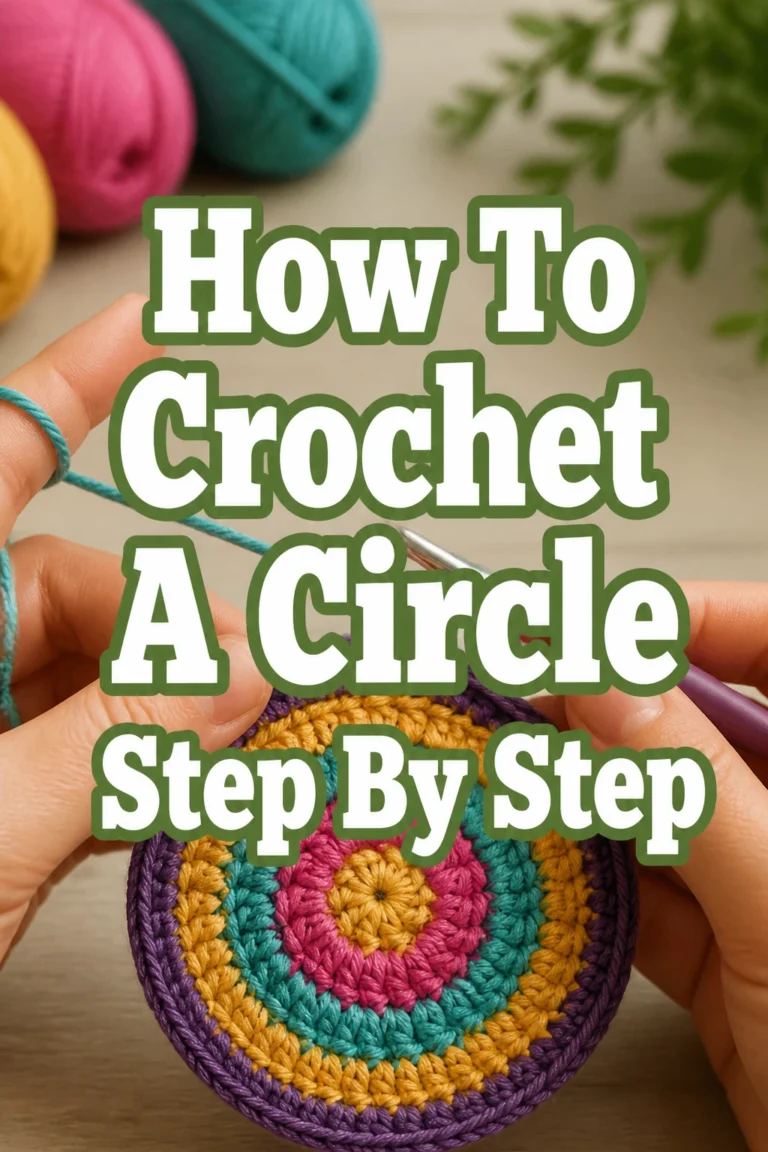
Grab some cotton yarn (maybe a neutral gray or a pop of mustard yellow) and an H/5.0mm hook. Make four single crochet squares or circles. Your coffee cup will be thrilled.
Pro Tip: Cotton yarn is less forgiving but holds its shape wonderfully for coasters and washcloths.
4. Half Double Crochet Stitch Sample
- Best For: Adding height to your work
- Vibe: Next-level basics
- Why it works: It’s a nice intermediate height, quicker than single crochet but not too tall.
Ready to level up your stitch game? The half double crochet is your next stop. It adds a little more height and drape.
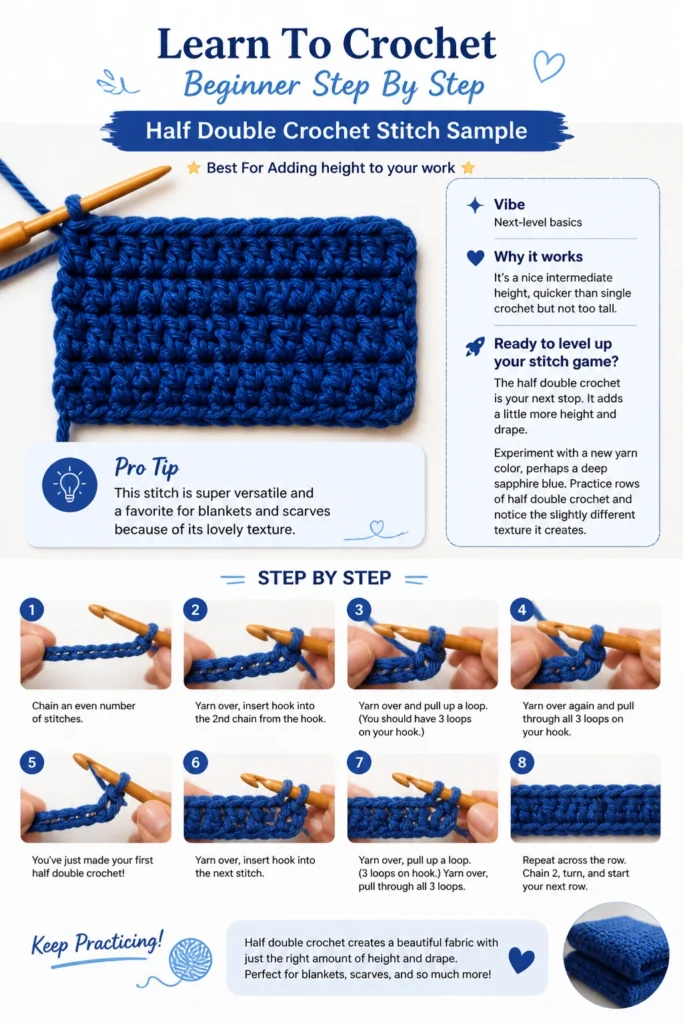
Experiment with a new yarn color, perhaps a deep sapphire blue. Practice rows of half double crochet and notice the slightly different texture it creates.
Pro Tip: This stitch is super versatile and a favorite for blankets and scarves because of its lovely texture.
5. Granny Square (Basic)
- Best For: Learning to work in the round
- Vibe: Retro charm
- Why it works: It teaches you corner turns and how to build outward from a central point.
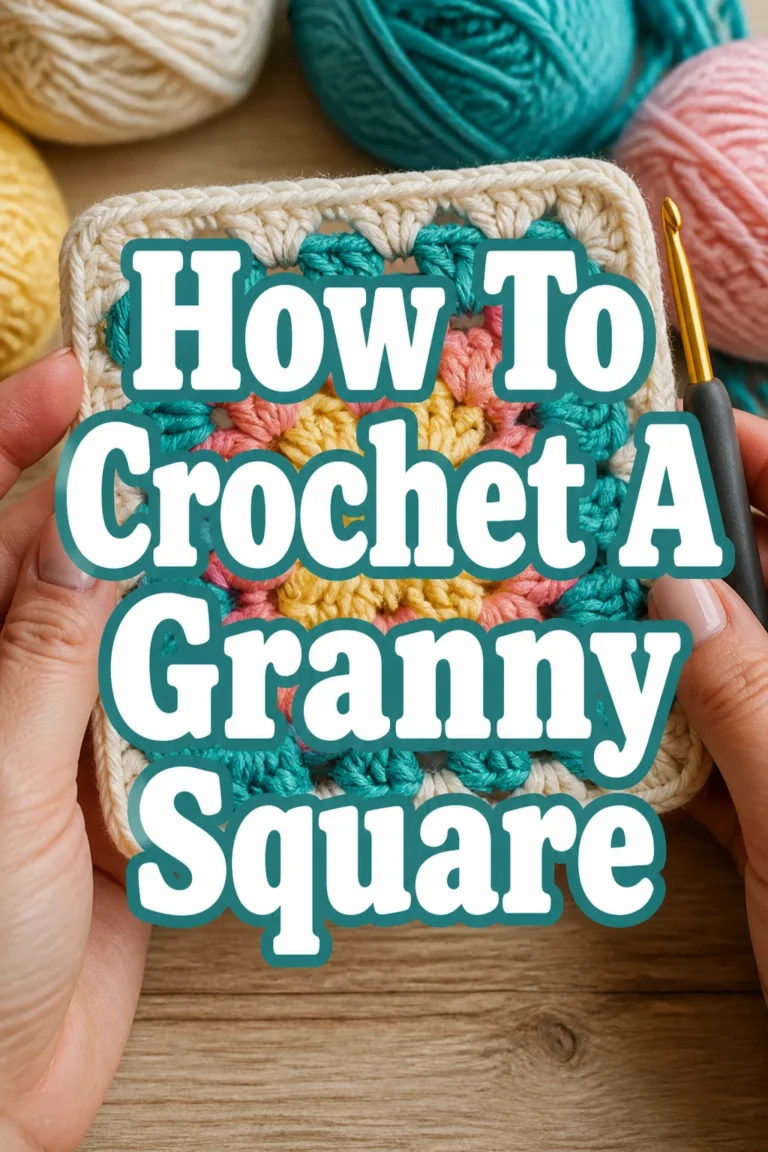
The granny square is iconic for a reason. It’s a fantastic way to learn how to work in circles and create geometric shapes.
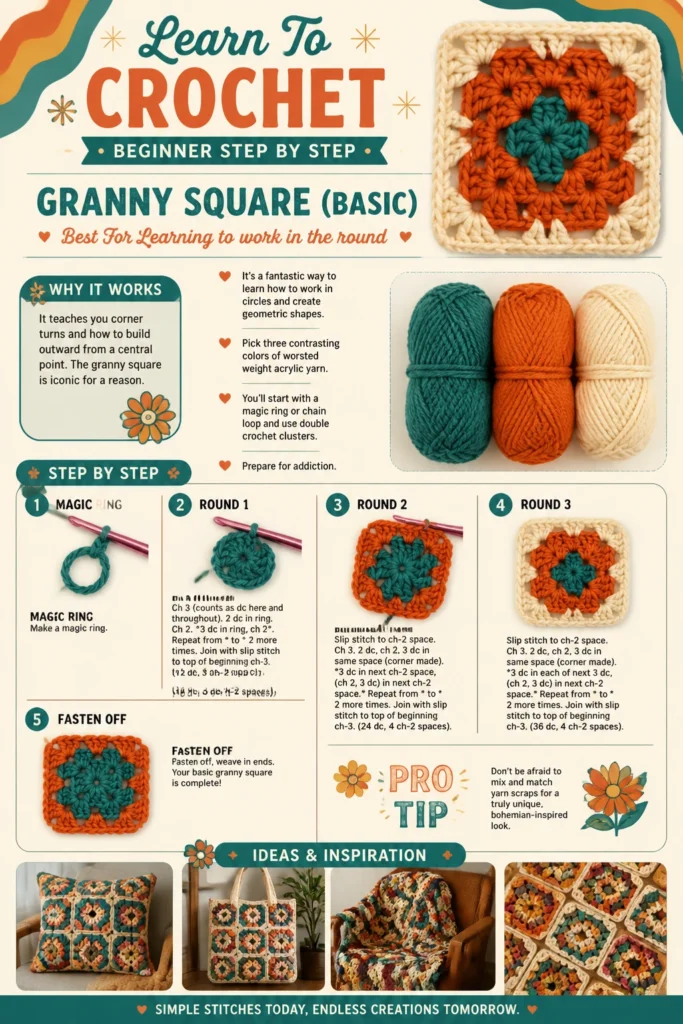
Pick three contrasting colors of worsted weight acrylic yarn. You’ll start with a magic ring or chain loop and use double crochet clusters. Prepare for addiction.
Pro Tip: Don’t be afraid to mix and match yarn scraps for a truly unique, bohemian-inspired look.
6. Double Crochet Stitch Swatch
- Best For: Quick progress on projects
- Vibe: Speedy stitch
- Why it works: It’s taller than single or half double crochet and works up much faster.
If you want to see your fabric grow quickly, the double crochet is your new best friend. It’s a tall, airy stitch.
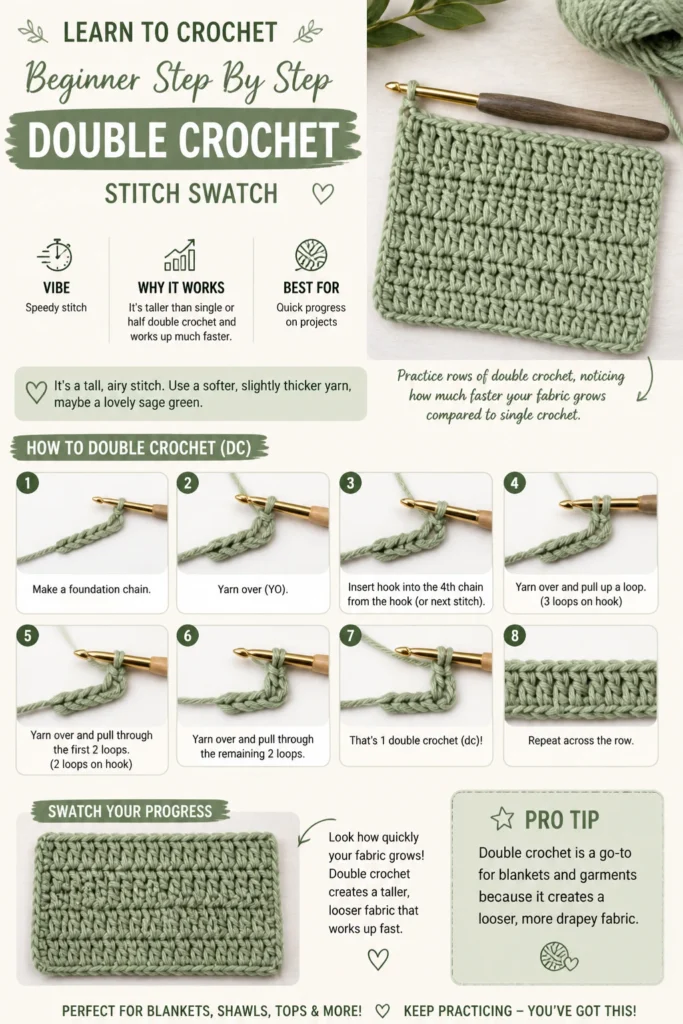
Use a softer, slightly thicker yarn, maybe a lovely sage green. Practice rows of double crochet, noticing how much faster your fabric grows compared to single crochet.
Pro Tip: Double crochet is a go-to for blankets and garments because it creates a looser, more drapey fabric.
7. Simple Washcloth or Dishcloth
- Best For: Practicing consistent tension
- Vibe: Practical homemaker
- Why it works: Cotton is easy to wash, and it’s another genuinely useful finished item.
Another practical project that hones your skills. A washcloth is basically a slightly larger coaster, perfect for practicing.
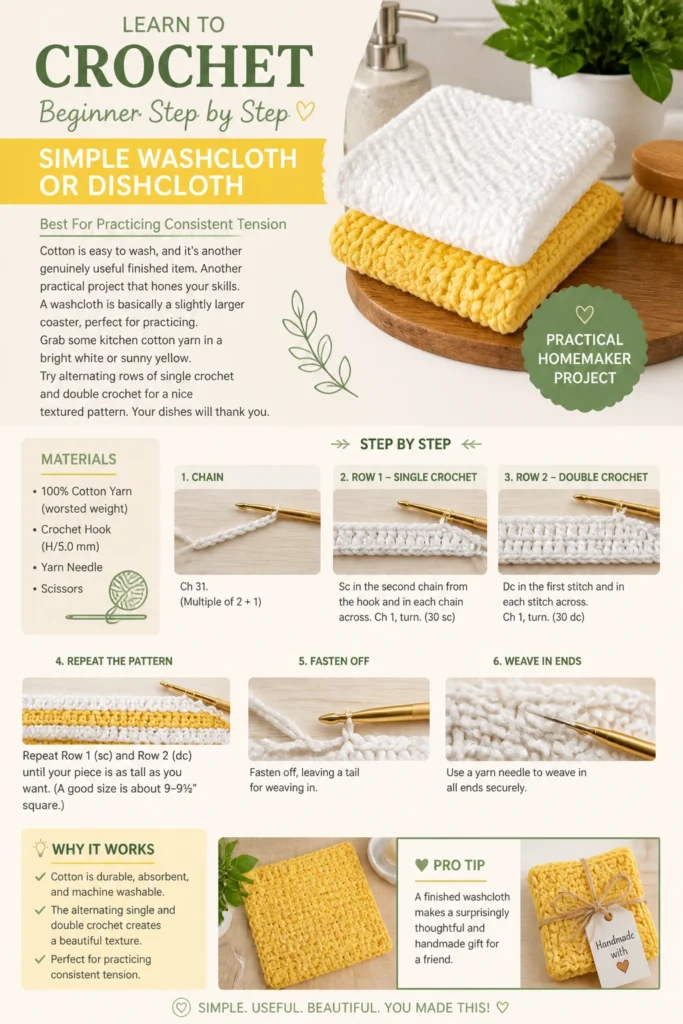
Grab some kitchen cotton yarn in a bright white or sunny yellow. Try alternating rows of single crochet and double crochet for a nice textured pattern. Your dishes will thank you.
Pro Tip: A finished washcloth makes a surprisingly thoughtful and handmade gift for a friend.
8. Beginner Scarf (Single or Double Crochet)
- Best For: Learning to make a rectangular piece
- Vibe: Cozy comfort
- Why it works: It’s a straight line, no shaping needed, just keep going until it’s long enough.
This is it, your first wearable! A scarf is the ultimate beginner project because it’s just one long rectangle.
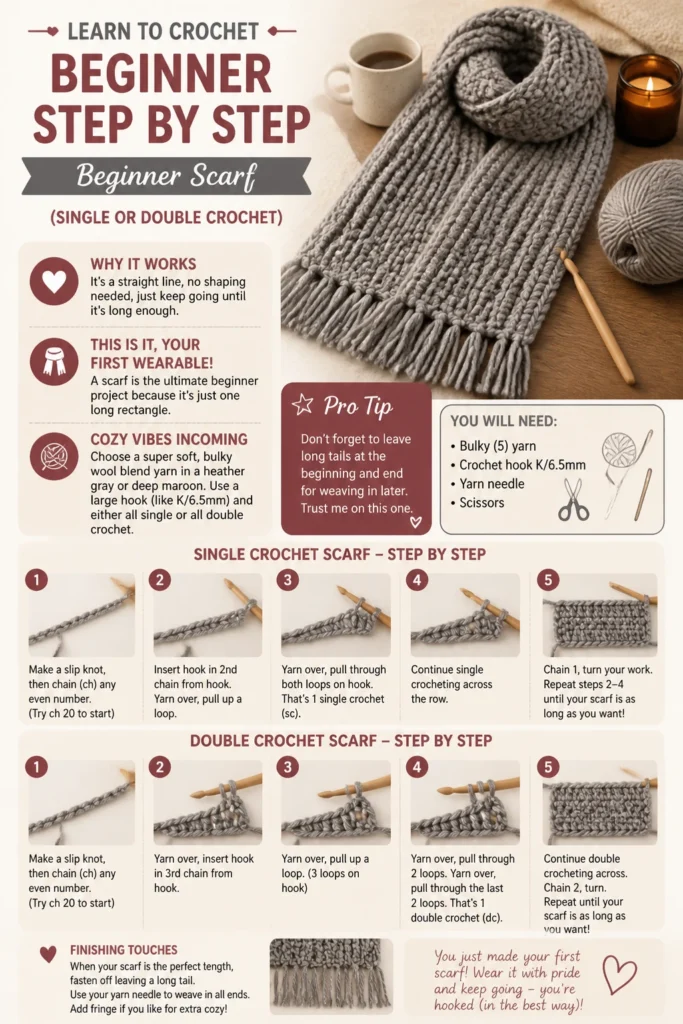
Choose a super soft, bulky wool blend yarn in a heather gray or deep maroon. Use a large hook (like K/6.5mm) and either all single or all double crochet. Cozy vibes incoming.
Pro Tip: Don’t forget to leave long tails at the beginning and end for weaving in later. Trust me on this one.
9. Learn to Change Colors
- Best For: Adding visual interest to projects
- Vibe: Creative flair
- Why it works: It opens up a whole world of striped patterns and multi-color designs.
Ready to get fancy? Changing colors is way easier than it sounds and instantly elevates your crochet game.
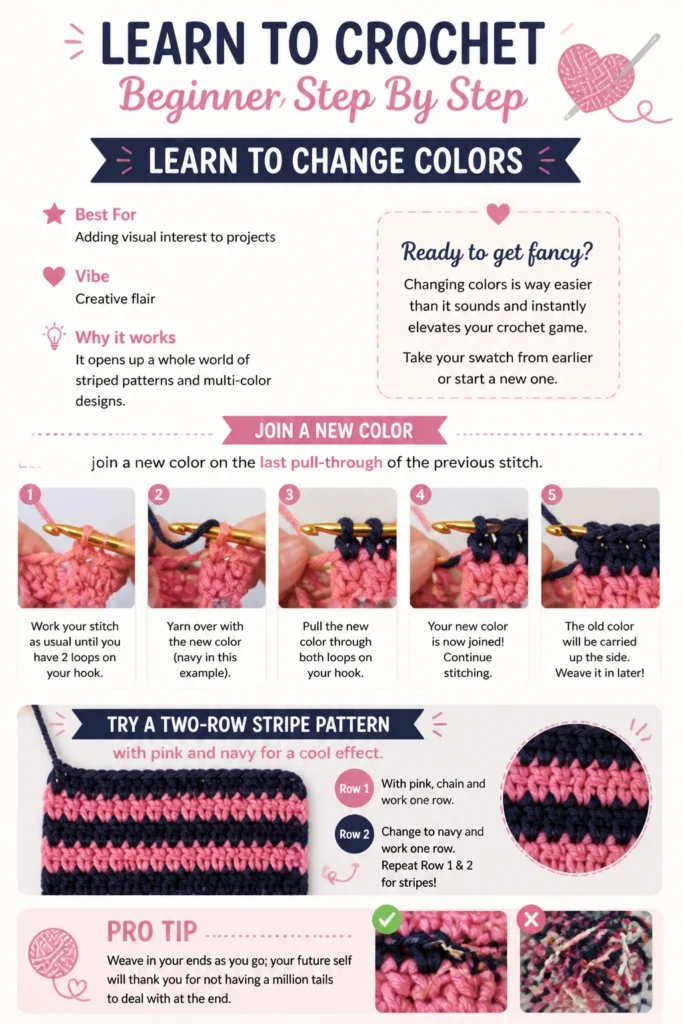
Take your swatch from earlier or start a new one. Learn to join a new color on the last pull-through of the previous stitch. Try a two-row stripe pattern with pink and navy for a cool effect.
Pro Tip: Weave in your ends as you go; your future self will thank you for not having a million tails to deal with at the end.
10. Basic Amigurumi Ball
- Best For: Working in the round without joining
- Vibe: Cute and cuddly
- Why it works: It introduces the magic ring and essential increasing/decreasing techniques for shaping.
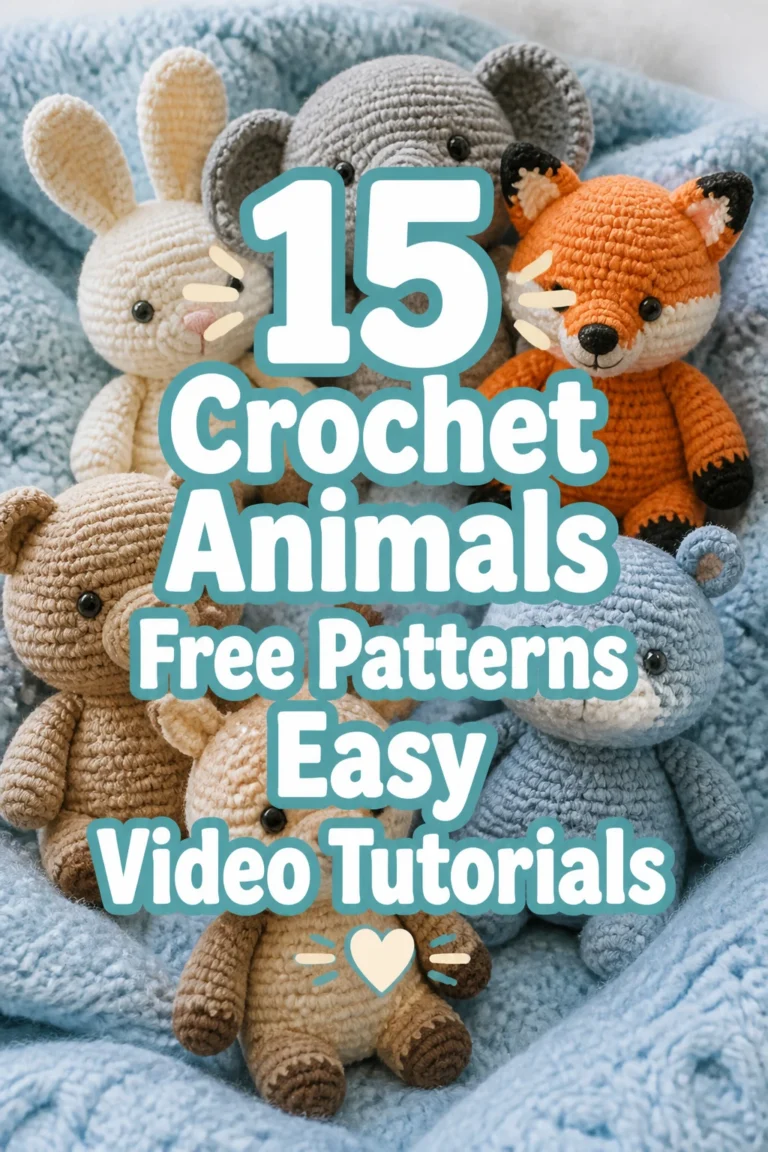
If you’ve ever wanted to make those adorable little stuffed creatures, this is your entry point. A simple ball is the foundation.
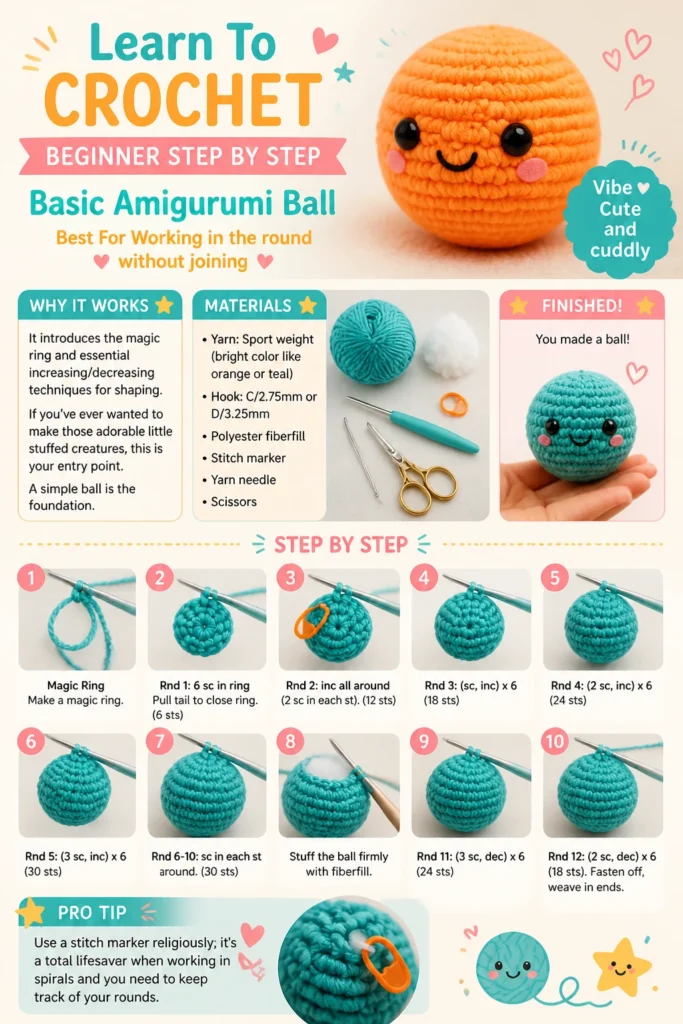
Use a small hook (C/2.75mm or D/3.25mm) and sport weight yarn in a bright color like orange or teal. Stuff it with a bit of polyester fiberfill to make it squishy.
Pro Tip: Use a stitch marker religiously; it’s a total lifesaver when working in spirals and you need to keep track of your rounds.
11. Simple Headband or Ear Warmer
- Best For: Quick gratification and a wearable item
- Vibe: Fashionable accessory
- Why it works: It’s a small project, uses basic stitches, and is a genuinely cool thing to wear.
Who doesn’t love a quick, stylish project? An ear warmer is perfect for showing off your new skills.
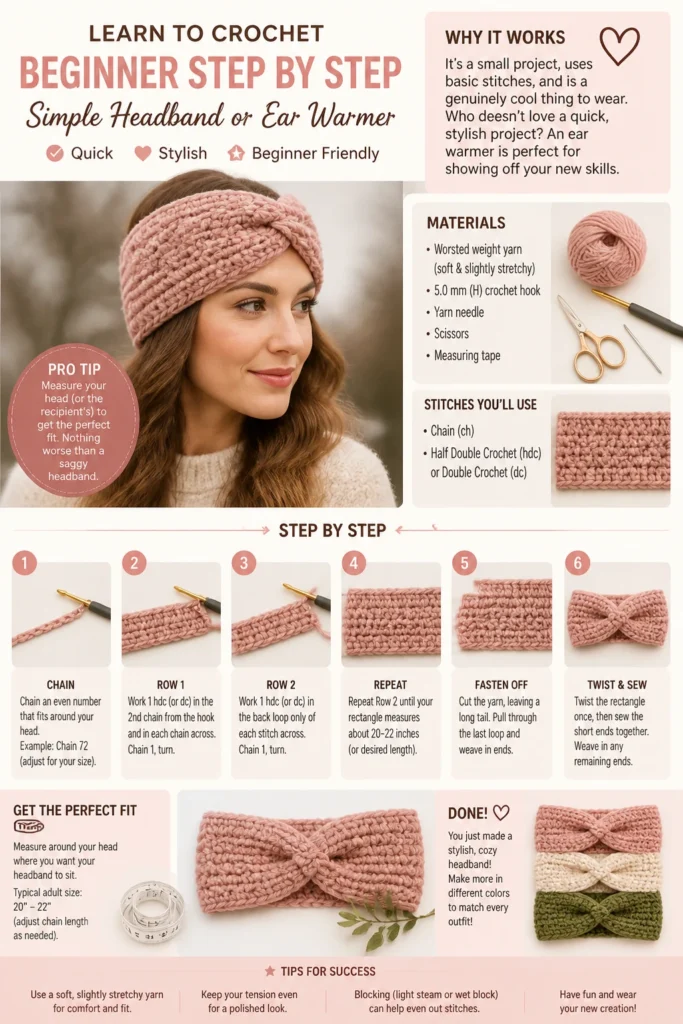
Pick a soft, slightly stretchy yarn, maybe a pretty blush pink or forest green. Use half double or double crochet stitches to make a rectangle that fits snugly around your head. Instant style points.
Pro Tip: Measure your head (or the recipient’s) to get the perfect fit. Nothing worse than a saggy headband.
12. Finishing Touches Weaving in Ends
- Best For: A professional, polished look
- Vibe: Polished perfection
- Why it works: It makes your projects look complete and prevents them from unraveling over time.
You’ve done all the hard work, now make it look seamless. Weaving in ends is the unsung hero of crochet.
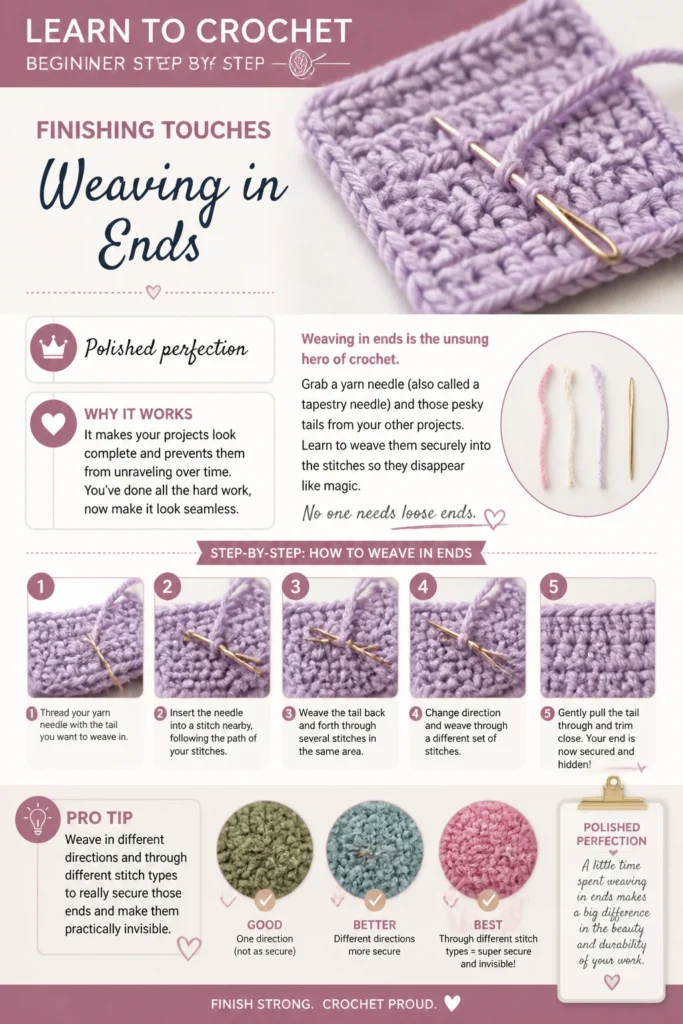
Grab a yarn needle (also called a tapestry needle) and those pesky tails from your other projects. Learn to weave them securely into the stitches so they disappear like magic. No one needs loose ends.
Pro Tip: Weave in different directions and through different stitch types to really secure those ends and make them practically invisible.
Our Top Recommended Finds
- A set of ergonomic crochet hooks: Your hands will thank you, especially during those marathon hooking sessions.
- A multi-pack of beginner-friendly acrylic yarn: Affordable, easy to work with, and perfect for practicing without breaking the bank.
- A good quality yarn needle set: Essential for neatly weaving in ends and assembling projects without a struggle.
Which of these will you try first?
So, there you have it, your personal roadmap to crochet glory. No more staring longingly at Instagram feeds; you’re about to make that magic happen.
Grab your hook and yarn, pick a starting point, and let the good times roll. Which of these awesome beginner steps are you tackling first?